COPYRIGHT

Copyright can protect:

  • Literary works, including novels, instruction manuals, computer programs, song lyrics, newspaper articles and some types of database.
  • Dramatic works, including dance or mime.
  • Musical works.
  • Artistic works, including paintings, engravings, photographs, sculptures, collages, architecture, technical drawings, diagrams, maps and logos.
  • Layouts or typographical arrangements used to publish a work, for a book for instance.
  • Recordings of a work, including sound and film.
  • Broadcasts of a work.

A work protected by copyright can only be copied with the copyright owner’s permission.

Copyright applies to any medium. This means that a person must not reproduce copyright protected work in another medium without permission. This includes, publishing photographs on the internet, making a sound recording of a book, a painting of a photograph and so on.

Copyright does not protect ideas for a work.  It is only when the work itself is fixed, for example in writing, that copyright automatically protects it. This means that you do not have to apply for copyright.

A copyright protected work can have more than one copyright, or another intellectual property (IP) right, connected to it.  For example, an album of music can have separate copyrights for individual songs, sound recordings, artwork, and so on.  Whilst copyright can protect the artwork of your logo, you could also register the logo as a trade mark.


AUTOMATIC RIGHT

So long as you have created and fixed, for example in writing, an original work that qualifies for copyright protection, that is it falls into one of the categories of material protected by copyright, you will have copyright protection without having to do anything to establish this. It is a requirement of various international conventions on copyright that copyright should be automatic with no need to register.


However, copyright registration can be obtained at the request of the author through the official means of registration. In México, there is INDAUTOR and in Spain there is the General Registry for the Intellectual Property. The author needs to pay some fees and fill in some forms to get copyright protection.

To help protect a copyright work, it is advisable to mark it with the © symbol, the name of the copyright owner and the year in which the work was created.  Although this is not essential, it will let others know when the term of protection started and it should then be possible to calculate whether it has ended or not.  It will also indicate who the owner was at that time in case it is then necessary to approach them should someone needs to ask permission to use the work.


Additionally, a creator could send himself or herself a copy by special delivery post (which gives a clear date stamp on the envelope), leaving the envelope unopened on its return (ensuring the person also knows what is inside each envelope in case they do this more than once). Alternatively the person could lodge the work with a bank or solicitor.  It is important to note, that this does not prove that a work is original or created by the author. But it may be useful to be able to show the court that the work was in his/her possession at a particular date.

BENEFITS OF COPYRIGHT PROTECTION

Copyright allows the author to protect the original material and stops others from using that work without permission. The existence of copyright may be enough on its own to stop others from trying to exploit that material. If it does not, it gives the author the right to take legal action to stop them exploiting the copyright, and to claim damages.


By understanding and using the copyright and related rights protection, the author can:

  • sell the copyright but retain the moral rights.
  • license your copyright for use by others but retain the ownership.
  • object if the work is distorted or mutilated.
  •  

Copyright gives the right owner numerous exclusive economic rights. Those rights can be explained better requesting an advise from us.

A brief description about them is that economic rights give the copyright owner the opportunity to make commercial gain from the exploitation of his/her work.  Copyright owners generally have the right to authorise or prohibit any of the following things in relation to their works:

  • Copying the work in any way. For example, photocopying, reproducing a printed page by handwriting, typing or scanning into a computer, and taping live or recorded music are all forms of copying
  • issuing copies of the work to the public
  • Renting or lending copies of the work to the public. However, some lending of copyright works falls within the Public Lending Right Scheme, and this lending does not infringe copyright
  • Performing, showing or playing the work in public. Obvious examples are performing plays and music, playing sound recordings and showing films or videos in public.  Letting a broadcast be seen or heard in public also involves performance of music and other copyright material contained in the broadcast
  • Broadcasting the work or other communication to the public by electronic transmission.  This includes putting copyright material on the internet or using it in an on demand service where members of the public choose the time that the work is sent to them
  • Making an adaptation of the work, such as by translating a literary or dramatic work, transcribing a musical work and converting a computer program into a different computer language or code.

Copyright is infringed when any of the above acts are done without permission, whether directly or indirectly and whether the whole or a substantial part of a work is used, unless what is done falls within the scope of exceptions to copyright permitting certain minor uses.

COPYRIGHT APPLIES TO:

  • Original works
    Most works must be original to have copyright protection.
  • Websites and the internet
    The same rules apply on the internet as with other medium.
  • Written work including software and databases
    Software and databases can be protected as written work.
  • Theatre
    Dance and mime can receive protection too.
  • Music
    Music can have numerous types of work capable of protection.
  • Artistic works including photographs
    Photographs are also artistic works.
  • Spoken word and performers
    Performers of spoken word may receive protection.
  • TV and Film
    Numerous types of work can be protected in the case of TV and film.

Intellectual property laws generally protect the following types of intellectual creations.

Literatura

Literary

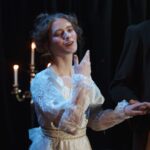
Música

Music

Drama

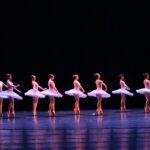
Dance

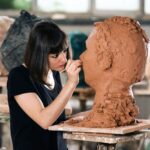
Persona pintando

Drawings & Pictures

Sculptures

Comics & Artwork

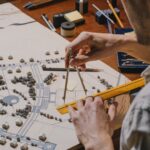
Arquitectonic Creations

Movies & Audiovisual Works

Radio & TV Programs

Software

Photography

Other works that, by analogy, may be considered literary or artistic shall be included in the category most closely related to their nature.

It is important to emphasize that any work modified in such a way that it becomes a derivative of the original work (translations, adaptations, compilations, etc.) is also eligible for protection. However, it is crucial to note that such derivative works may not be commercially exploited unless there is prior, express, and written authorization from the original author.

Los derechos conexos, también conocidos como “derechos vecinos”  son  aquellos que generalmente tienen una estricta relación con los derechos de autor, ya que generalmente los materializan, de maneras ciertamente artísticas pero en una evolución de creatividad diferente, por ejemplo, artistas, intérpretes, músicos ejecutantes, etc.

De manera individual:

Actores, narradores, declamadores, cantantes, músicos, bailarines, o a cualquiera otra persona que interprete o ejecute una obra literaria o artística o una expresión del folclor o que realice una actividad similar.


De manera colectiva pueden ser:

Artistas que participen colectivamente en una misma actuación, tales como grupos musicales, coros, orquestas, de ballet o compañías de teatro, antologías, y de obras u otros elementos como las bases de datos.

El editor de libros es la persona física o moral que selecciona o concibe una edición de una obra literaria o artística (unitaria y no periódica), que realiza a través de terceros su elaboración. musicales, coros, orquestas, de ballet o compañías de teatro, antologías, y de obras u otros elementos como las bases de datos.

Fonograma es toda fijación, exclusivamente sonora, de los sonidos de una interpretación, ejecución o de otros sonidos, o de representaciones digitales de los mismos y Productor de fonogramas es la persona física o moral que fija por primera vez los sonidos de una ejecución u otros sonidos o la representación digital de los mismos y es responsable de la edición, reproducción y publicación de fonogramas.

Videograma es la fijación de imágenes asociadas, con o sin sonido incorporado, que den sensación de movimiento, o de una representación digital de tales imágenes de una obra audiovisual o de la representación o ejecución de otra obra o de una expresión del folclor, así como de otras imágenes de la misma clase, con o sin sonido y que Productor de videogramas es la persona física o moral que fija por primera vez imágenes asociadas, con o sin sonido incorporado, que den sensación de movimiento, o de una representación digital de tales imágenes, constituyan o no una obra audiovisual.

Organismo de radiodifusión es la entidad concesionada o permisionada capaz de emitir señales sonoras, visuales o ambas, susceptibles de percepción, por parte de una pluralidad de sujetos receptores.

Entendiendo por emisión o transmisión, la comunicación de obras, de sonidos o de sonidos con imágenes por medio de ondas radioeléctricas, por cable, fibra óptica u otros procedimientos análogos. El concepto de emisión comprende también el envío de señales desde una estación terrestre hacia un satélite que posteriormente las difunda.

SERVICES

  • Legal advice and defense of intellectual property rights and related matters (copyright, literary works, musical compositions, software, photography, sculpture, architecture, etc.).
  • Advisory services regarding intellectual property rights infringements, whether in civil or criminal proceedings.
  • Advice on the private registration of content for websites, portals, digital magazines, and blogs.
  • Consultation, registration, and protection of intellectual property rights: registration of rights with the Intellectual Property Registry.
  • Guidance on alternative protection strategies for multimedia, audiovisual, literary, and graphic works.
  • Design and management of alternative registration strategies.
  • Drafting and review of licenses and transfer agreements.
  • Intellectual Property Registrations in Mexico, Spain, and internationally.
  • Administrative and private procedures before the Intellectual Property Registry and collective rights management organizations.

If you need legal assistance, clic here for more information.


Follow us on Facebook & LinkedIn

CONTACT

Calle D, Mz. 1, No. 4 Educación, Coyoacán 04400, Ciudad de México, México E-mail: info@merida-ip.com

© Copyright 2025 | All rights reserved | Privacy Notice